Evening Relaxation: How to Light Your Garden Bench Area Without Electricity
October 09, 2026 - Evening Relaxation

October 04, 2026 - Outdoor Seating
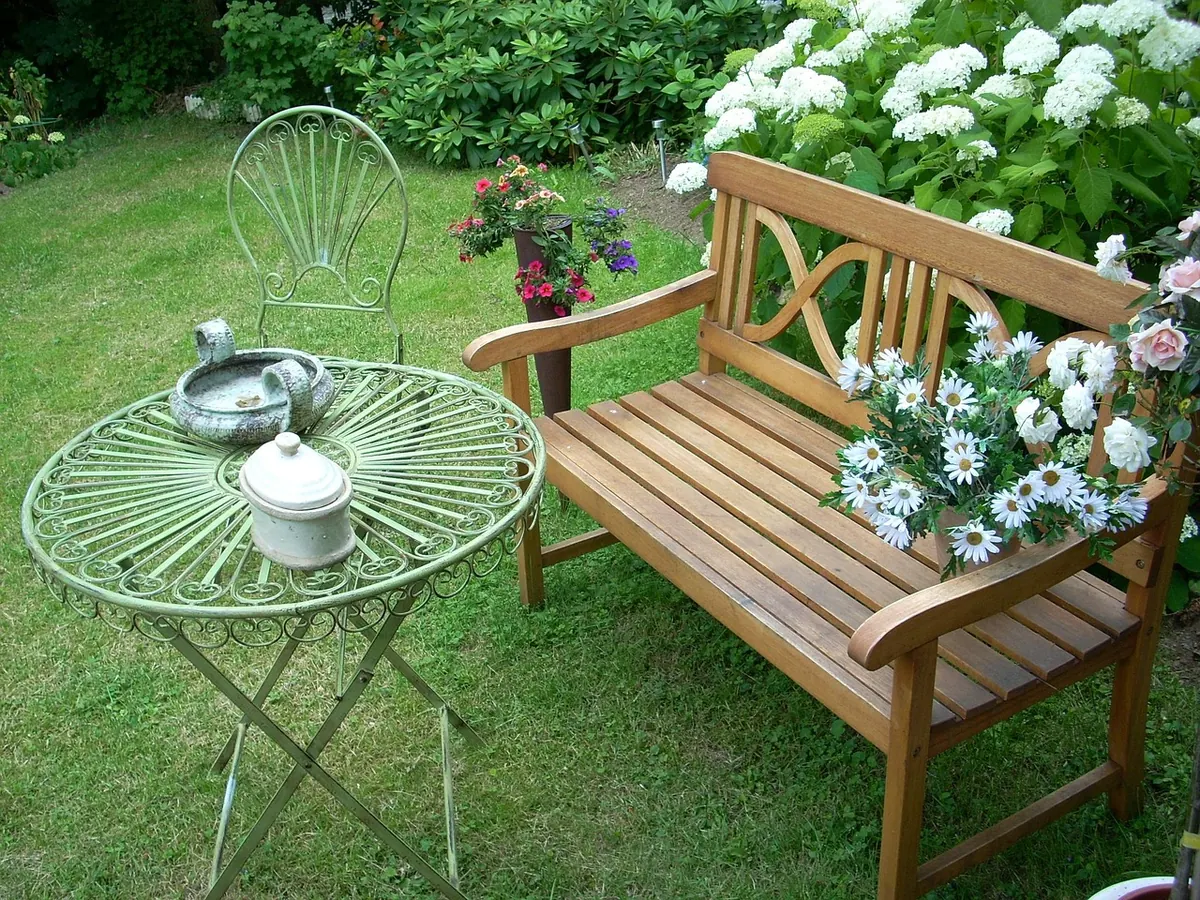
A bench looks modest in a garden centre and surprisingly large once it's on your patio. It's the most common mistake with outdoor seating: buying the length that felt generous in the shop, then discovering it blocks the route from the back door or leaves nowhere for a side table. Getting the size right isn't difficult, but it does need five minutes with a tape measure before you commit to a design you like.
Here's how to work out what your space can take, and how many people you can seat properly rather than simply squeeze on.
Measure the usable area rather than the whole patio. Slab edges, planting beds, a downpipe, a drain cover, a step down to the lawn — all of these reduce what you can actually use. Note how much wall, fence or railing you could sit a bench against, then subtract anything that interrupts that run.
Walkways matter as much as seating. Allow 60cm as a minimum to pass comfortably, and 75–90cm if someone might be carrying a tray or if it's the main route through the garden. A bench that leaves less than that will have people stepping over it, and the patio will feel cramped even when the bench is empty.
As a working rule, allow 55–60cm of seat width per adult. That's the width of the seat itself, between the arms or between the ends of a backless bench. Below that, shoulders start to overlap and nobody settles.
So two people want about 1.2m, three want 1.5–1.8m, and four want roughly 2m or more. Armrests change the sums: a 1.5m bench with arms is realistically a comfortable two-seater with somewhere to rest a book. If you're seating four adults along one side of a table, treat 2m as the target; children need noticeably less.
It's worth matching the numbers to how you actually live. If four people sit down together twice a year, a bench that seats two well will be used far more than one that seats three badly. A bench plus a pair of lightweight chairs often works better than a single long bench, because you can pull the chairs round when the sun moves.
Seat height usually falls between 40cm and 45cm, which is deliberately close to a dining chair so the bench can be pulled up to a table. Much lower and older guests struggle to get up; much higher and feet dangle.
Seat depth is typically 45–55cm, but a deep, reclined garden bench can need 65–75cm front to back. That matters if you're fitting it into a narrow strip beside a wall. Then check the clearances around it:
Straight benches suit long wall runs. Corner benches make the most of an L-shaped patio or an enclosed courtyard, using a corner that wouldn't take a table. Curved benches sit well against round beds and radius edges.
A backless bench in the middle of a patio seats people from both sides, which is handy around a fire pit or a central table — but without a back to lean on, it's a twenty-minute seat rather than an evening one. If you plan to sit out for an hour with a book, a gentle recline beats an upright back every time.
Think about mowing, pressure-washing and clearing the patio for a party. A heavy bench is stable and won't shift in a gale, but you'll need two people and somewhere to put it. A lighter or folding design gives you flexibility in a small space; if it folds away for winter, measure the gap in the shed or under the stairs now rather than in November. Left outside all year, aluminium and hardwood tend to cope with British weather better than softwood — though softwood is perfectly serviceable if you're prepared to treat it regularly.
55–60cm of seat per person. 60cm of walkway as a minimum. A seat height of 40–45cm, with a hand's width left behind the bench.
If your measurements come out tight, seat fewer people or choose a bench without arms. Two comfortable seats that everyone gravitates towards will earn their place on the patio far better than three cramped ones that nobody chooses.
Photo: artemtation / Pixabay

Warm, low-cost ways to light a garden bench at dusk without wiring — solar panels, glass lanterns, candles,...
Choose a bench spot by matching it to the hours you'll actually use it: evening sun, shelter from prevailing wind, a...
Copyright © 2026 Dusk Bench. All Right Reserved.